Understanding Referrals
Should You Even Run A Refer A Friend Campaign?
The degree to which you’re successful approximates the degree to which you build a product that is so good, people spontaneously tell their friends about it.
Mobile gaming companies (think Candy Crush or Monopoly Go) are muscular performance marketing ad spenders. In 2025 they are projected InsightTracker to generate over $100bn in revenue, with about 25% of revenue going towards 2024 Bain Mobile Gaming Report advertising. They are clearly experts at digital marketing, otherwise they wouldn’t survive. But they don’t spend nearly as much on referrals as Fintech companies do. Why?
Not all products are suitable for high volume, paid Refer-A-Friend schemes. Just because PayPal, Revolut and Wise acquired a large fraction of their users through a RAF schemes doesn’t mean your company will. The following companies are likely to struggle with a Refer-A-Friend scheme: a company with 0 users, a socially sensitive product (e.g. erectile dysfunction pills or credit cards for people with bad credit) or a niche product such that potential customers are unlikely to know each other (e.g. clients of a funeral home) is unlikely to be successful at a Refer-A-Friend scheme.
The characteristics of your product (or service) impact the likelihood of success in running a successful RAF scheme:
- Network Effects. Revolut, PayPal and Wise grew fast on RAF schemes because their business (“peer to peer payments”) is inherently a social product. Most transactions have two parties, the person sending the money and the person receiving it. Users of payments businesses generally have a strong incentive to refer their friends onto the platform, as the platform then becomes more valuable to them the more of their counterparties use them.
- Customer Base Size. If you are just starting out with user acquisition RAF is unlikely to be helpful. RAF requires a large number of customers to start with, because only a subset of them will go on to refer new users.
- Product & Customer Base Sociality. Is your product something people would talk about? People are much more likely to share information about good places to eat than they are treatment options for genital warts. Customer demographics matter too. For instance, young people tend to refer more.
- Product Trust Requirements. Do your customers need to trust your product? People tend to trust things their friends trust, and far more trust is required for a financial app than a video game.
- User Lifetime Values (LTVs). Are your customers in the RAF LTV sweet spot? If your business has users who are on average worth very little, you probably have little room to offer financial incentives to refer friends. I’ll happily refer a friend to a product if I’ll get 100 USD for it, but I’d be insulted if someone offered me 10 cents. Conversely, if your customers are worth a lot, you might want to have professional sales and accounts managers involved in the process, which negates the purpose of a productised RAF experience.
Case Study: Refer-A-Friend Schemes In The Wild
Lets look at a few examples of modern, successful RAF campaigns for Revolut, Robinhood, Wise and Monzo.
Revolut
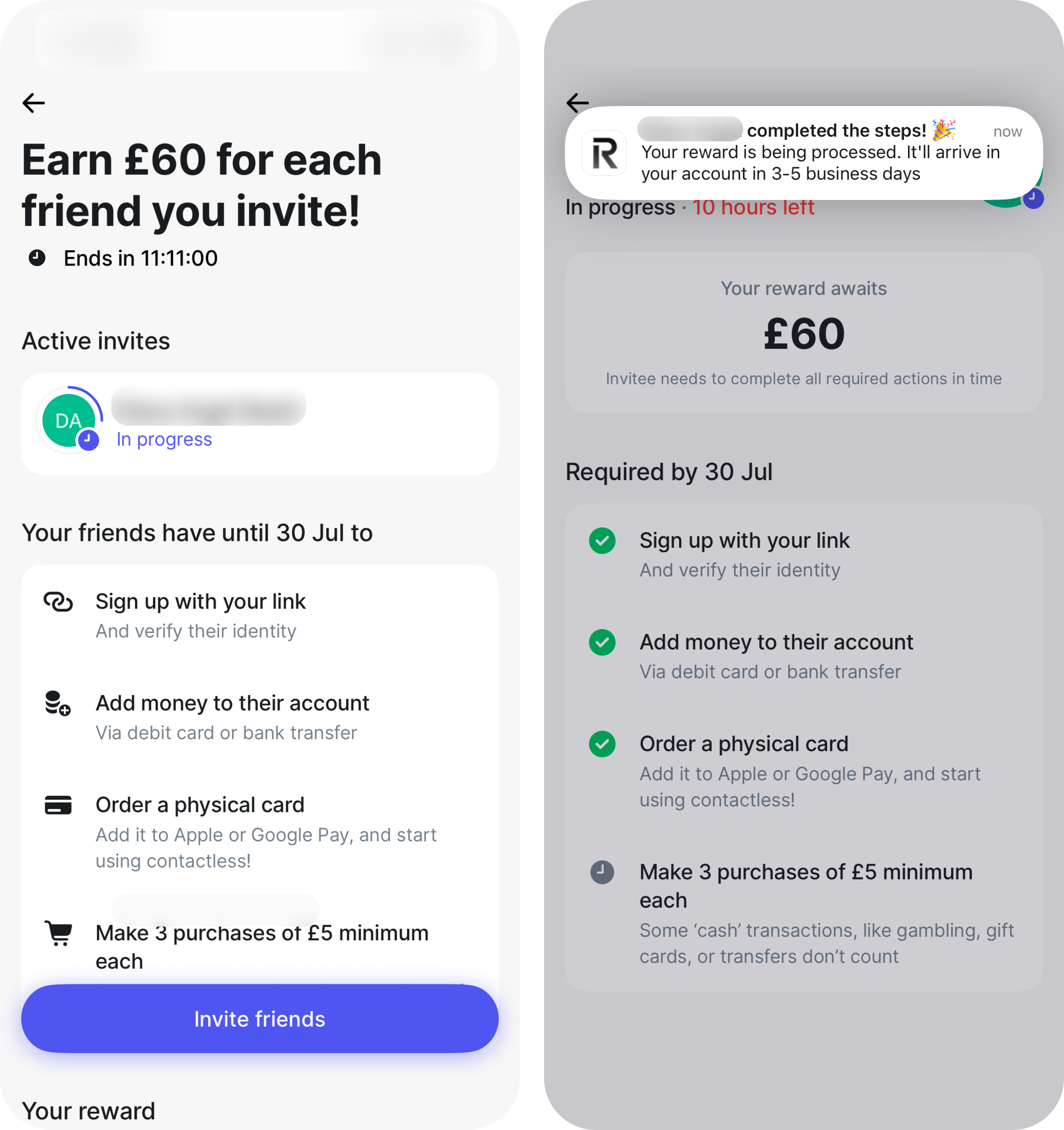
In its 2024 shareholder report, fintech giant Revolut claims that 65% of retail customers are acquired via word of mouth or referrals. This is at a significant scale too, they grew 38% year on year to 52.5m customers, see Revolut 2024 Annual Report
Like most companies, Revolut has experimented extensively on their referral programme, but the iteration above shows a limited time offer whereby both the referrer and the person referred gets $10.
There’s two things to point out:
- the equal split of the reward of the referrer and the referee This has become the most common best practice but is by no means set in stone
- the limited time deal which adds some urgency to the user
Robinhood
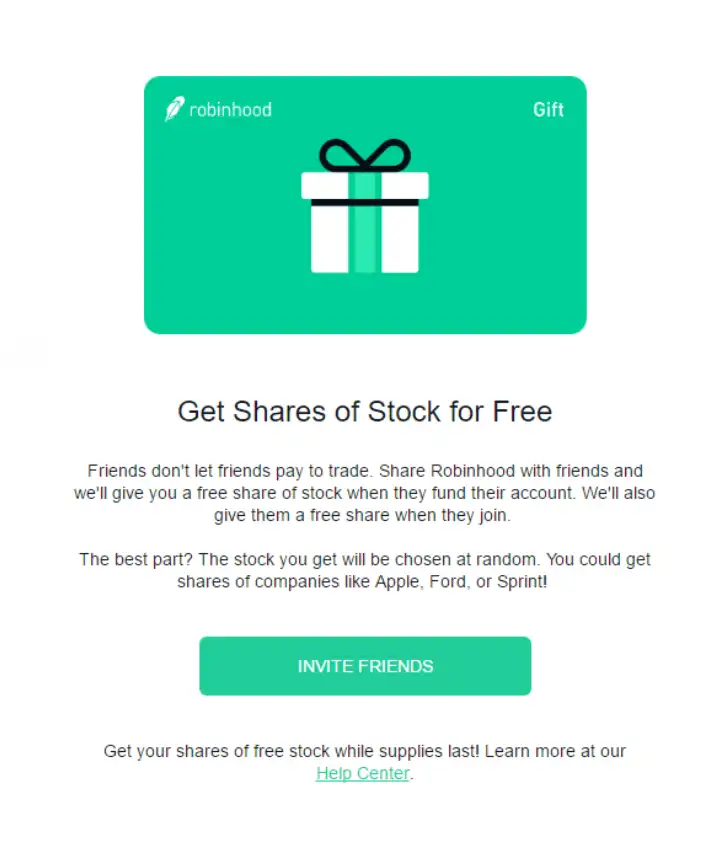
In Robinhood’s S1 filing in 2021, Robinhood boasts that:
“a majority of our new customers join our platform organically or through the Robinhood Referral Program…These channels were responsible for over 80% of the new Funded Accounts”.
Robinhood’s key differentiation is the variable reward offer, whereby users can receive “up to $200”. But if you read the terms and conditions of the referral campaign, you’ll find that:
The cash value you receive could be anywhere between $5 and $200. Keep in mind, approximately 99% of customers will get stock worth $5. You can use this reward to claim a fractional share of a stock.
Variable rewards have been very successful for Robinhood, but the exact same scheme may not be appropriate for all other products.
Wise
The stat I’m most proud of, and the hardest thing to make happen out of all of that was we acquired 70% of the users that found out about Wise last month through word of mouth.
Similarly, Wise (formerly known as Transferwise) is on record explaining that roughly 70% of their customers come from referrals at least according to this job ad on their website.
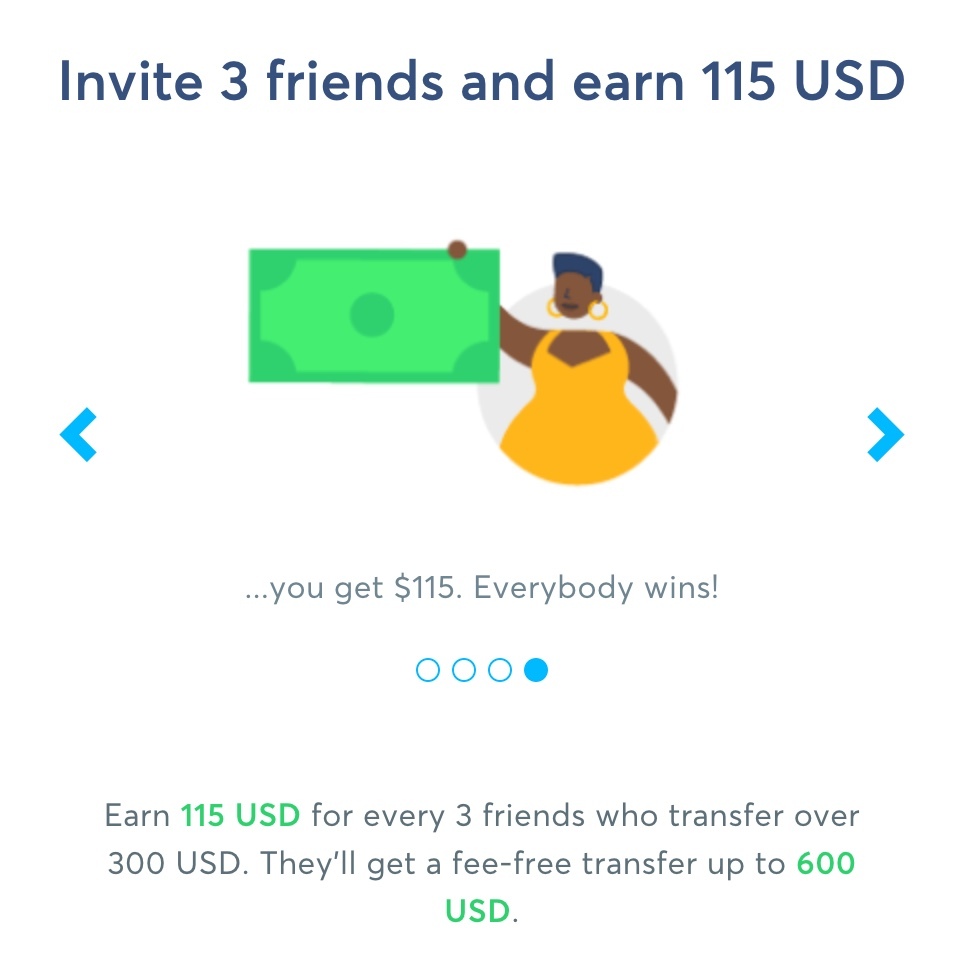
The example above is similar to Robinhood in that a large number gets shown to the user for a referral, whereas the “true” number is much lower.
Key to understanding Wise’s referral programme is that their customer lifetime values are significantly lower than Robinhood’s or Revolut’s, meaning that they cannot afford to pay as much per user. For this reason they batch their referral programme via this step function. This way they can lower their costs by introducing “breakage”, i.e. “free” referrals that they do not have to pay for because the referrer never reaches the 3 user unlock.
Definitions: What is a Refer-A-Friend Scheme?
If you do build a great experience, customers tell each other about that. Word of mouth is very powerful.
People are social creatures. People have a natural tendency to talk, and Refer-A-Friend as a user acquisition channel aims to leverage natural social behaviour of your users in order to acquire new customers. In other words:
A Refer-A-Friend scheme is a structured program where existing users recruit new customers to a product.
There are two types of users involved in Refer-A-Friend schemes:
- referrer: an existing user that invites a new user
- a referee: the new user being referred to use your product
Likewise, there are two categories of referrals:
- incentivised: this is when you provide your customers with a reward for successfully referring someone
- unincentivised: when you do not provide your customers with an incentive for successfully referring others
The qualification criteria are the requirements your users (either referrer or referree or both) need to hit in order receive a reward.
There are two broad categories of rewards:
- cash incentives: whereby you offer users cash or cash equivalents (e.g. Amazon gift cards).
- non-cash incentives: non-cash incentives which have low marginal costs, like extra lives in video games (e.g. Candy Crush) or free premium features (e.g. DuoLingo)
It is important to also clarify a few things that are similar to RAF schemes but have some important differences.
Giving new users a reward if they meet a certain qualification criteria, if they haven’t been referred by an existing user, is a sign-on bonus. Sign-on bonuses have similar dynamics than referrals, but are sufficiently different that they should be structured differently.
Similarly, when a single referrer gets compensated for referring a large volume (think hundreds) of referees, he is not so much a referrer but an affiliate.
Operationally, there are two important terms you must be aware of:
- Fraud: when professionals, often in organised groups, are trying to rip you off. They could be using stolen / bought identities, bot farms, etc.
- Abuse: Abuse is simply when everyday people decide to try to take your money. This means a group of college kids who all sign up and refer each other for the rewards.
Who Refers, Who Gets Referred, Why And How?
For every social app I’ve ever built, number of invitations sent per user drops 20% for every additional year of age—from 13 years old to 18
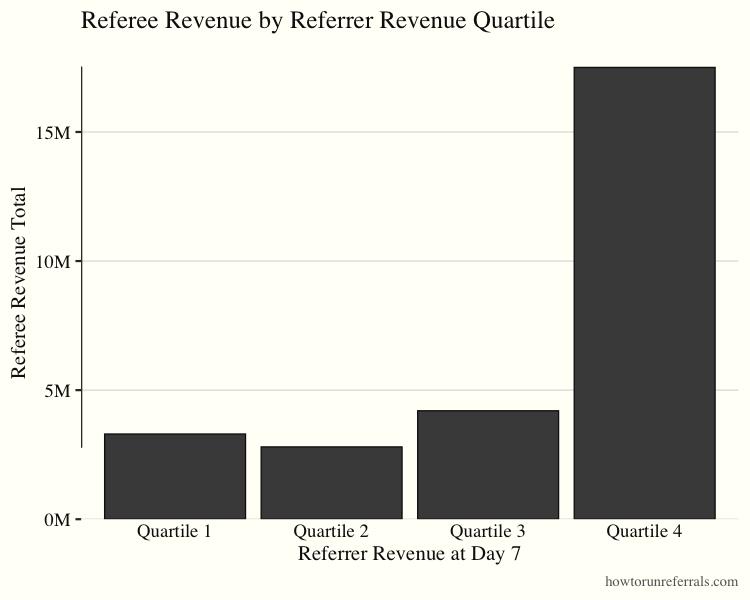
Good begets good. Generally, people refer people like themselves. There are various other factors which influence the likelihood someone will refer or be referred to your product. The single most important insight is that good users are also the best referrers.
Not only do good clients usually refer the most users (under normal circumstances) but they also refer the highest quality users. Keep an eye on your power users and try to figure out what you can do to to encourage them to refer. Unfortunately, it is also the case that the minority of referees who are referred by low value clients tend to be low value clients themselves.
Yet it is no coincidence that most “viral” apps tend to start with teenagers or college aged individuals. Demographics play an important role, as the quote above implies. Generally, younger users tend to refer more. But whereas social media networks want you to refer more new people because of the strengthening of network effects and a relatively low cost to service users, most businesses (particularly fintech businesses) want more of the right users.
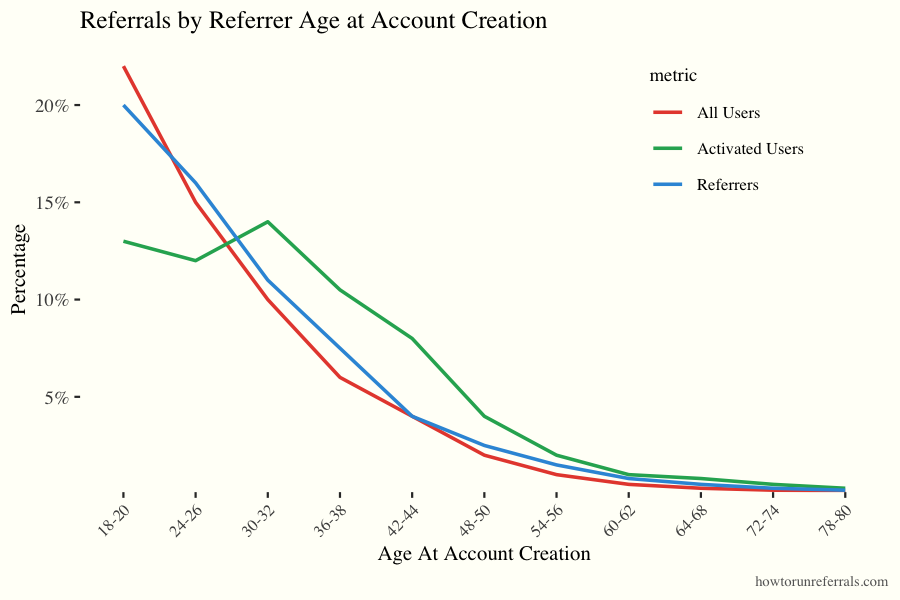
The chart above shows that referred users tend to skew young, but most of the value generated by the referral programme doesn’t come from the youngest referred users. The sweet spot is somewhere in the middle, where you still get valuable users but at a high enough volume.
If, like Nikita Bier, your goal is to acquire as many users as possible, then by all means try to skew as young as possible. If, on the other hand, you want to get as much value as possible from referrals as a user acquisition channel, you need to appeal to the right demographic.
Most Users Refer Only One Or Two Users
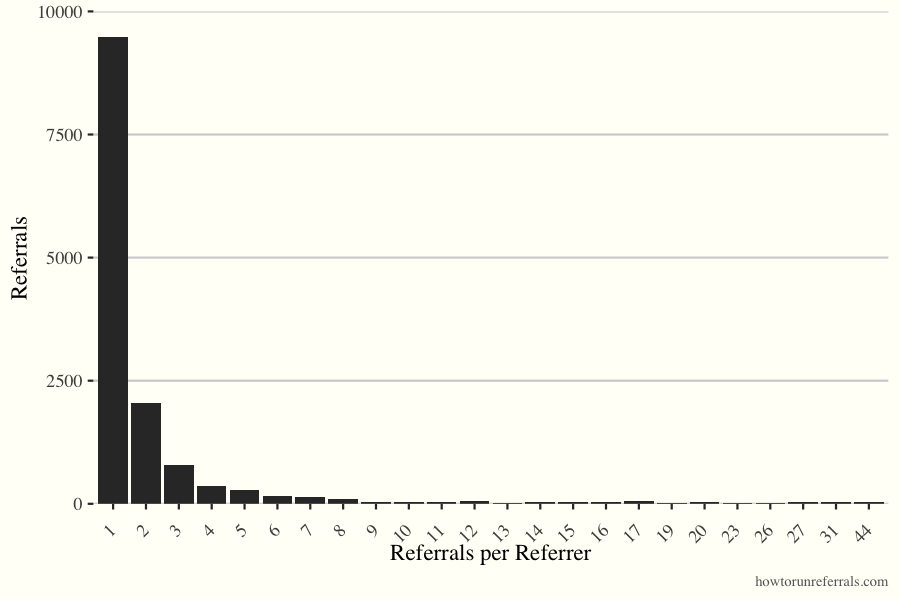
As the title implies, the vast majority of users who refer (keep in mind most users do not refer anyone) only successfully refer one or two users.
From this it follows that the single most important referral is the first one. In other words, the biggest leverage you have on a referrals programme is increasing the percentage of users who make at least one referral. It depends on your product, but it is unlikely for the user to “know” enough people who will convert dozens of people to your product.
If your distribution doesn’t look like this, but rather has a number of “superreferrers” referring a large percentage of users, you need to carefully inspect who these users are and who they are bringing in. This is not necessarily a problem, and can be a good source of new user acquisition, but I would argue that these are no longer really referrers, but rather affiliates.
Affiliates require far more stringent monitoring. If left unmonitored you may be exposing yourself to risks like: affiliates increasing your marketing costs by bidding on your keywords, running reputationaly risky black-hat marketing campaigns or even individuals running fraud rings using your referrals scheme to monetise. see more under Referrals & Affiliates
Referred Users Are Highly Likely To Convert
In terms of conversion rates, referred users are both more likely to convert and convert faster than users acquired from other channels.
There’s a few reasons for this: - If incentivised, they have much higher motivation than your regular users. - Chances are their friends already sold or explained your product to them, and are effectively “warm” leads. The referrer has already done a lot of the work for you by the time they hit the onboarding flow. Consider testing a separate onboarding flow for referred users.
If the conversion rate for your referred customers isn’t multiples of your overall onboarding funnel, you need to double check something hasn’t broken.